
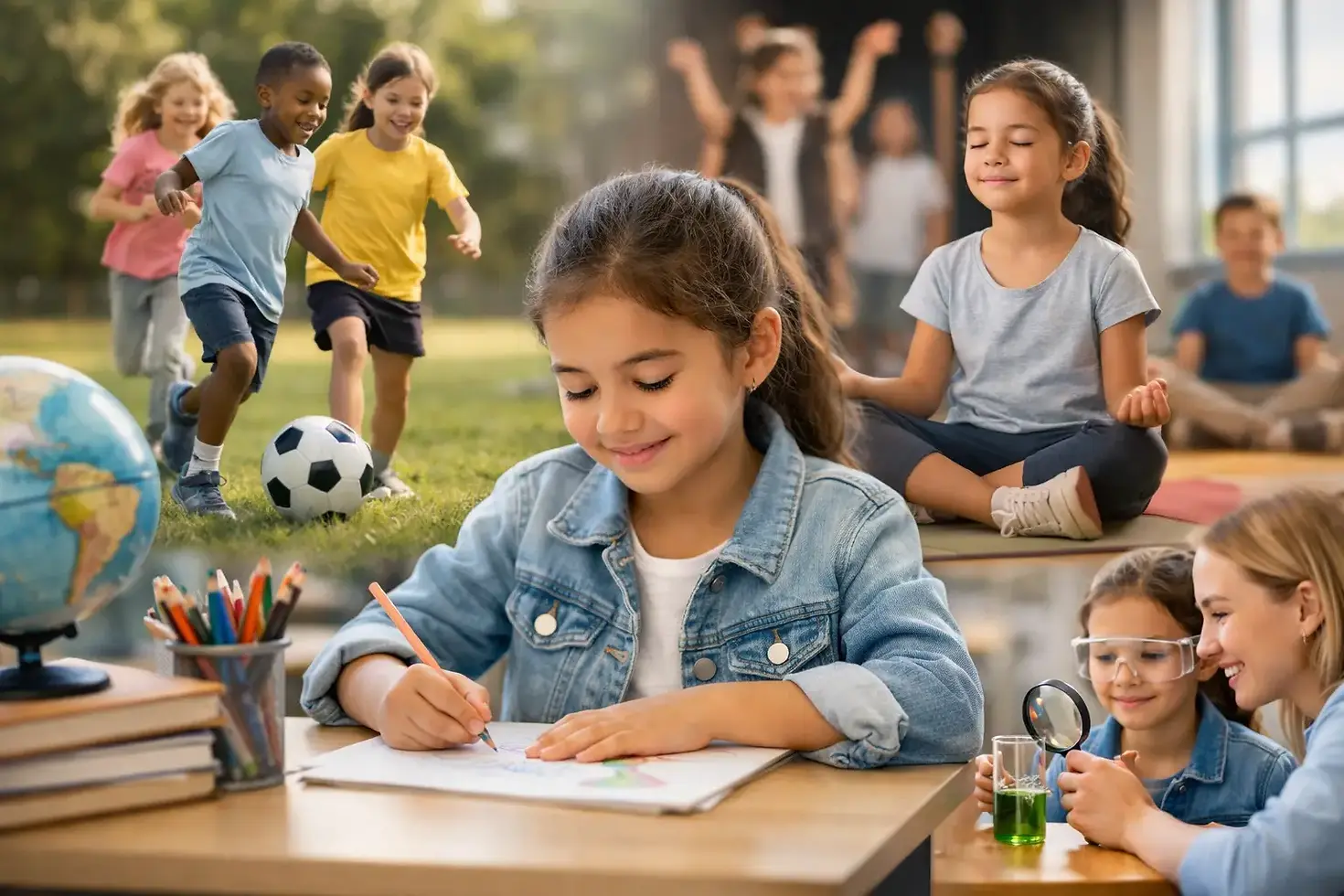
Holistic Development of Child in School
- Jun 9
- 5 min read
A child who can count to ten but struggles to share, settle, or express big feelings is not truly ready to thrive. That is why the holistic development of child in school matters so much, especially in the early years when learning, behaviour, confidence, and wellbeing are all growing together.
For parents of children aged 2 to 5, this idea can feel both reassuring and a little overwhelming. Most families already know that early learning is about more than letters and numbers. What often helps is understanding what holistic development actually looks like in a school or early learning setting, and how it supports children in practical, everyday ways.
What holistic development of child in school really means
Holistic development means seeing the whole child, not just one part of their progress. In a strong early learning environment, educators are thinking about how children grow socially, emotionally, physically, cognitively, and creatively at the same time.
That matters because young children do not develop in neat categories. A child building with blocks is not only learning about size and balance. They may also be practising patience, talking with peers, solving problems, and building confidence after a tower falls over and they try again. One experience can support many areas of growth.
In school preparation, this broader approach is especially valuable. Children need early literacy and numeracy skills, of course, but they also need resilience, curiosity, independence, and the ability to join a group, follow routines, and ask for help when they need it.
Why a whole-child approach matters in the early years
The early years set the tone for how children feel about learning. When children feel safe, known, and encouraged, they are more likely to participate, take small risks, and enjoy new experiences. That emotional foundation is not separate from learning. It is part of learning.
A child who feels secure is more likely to try a puzzle that looks difficult, speak up during group time, or give a new activity a go. On the other hand, a child who feels unsettled may find even simple tasks hard to manage. This is why caring relationships and consistent routines are not extras. They are central to development.
For working families, this also brings peace of mind. Reliable care matters, but so does knowing that each day supports your child's growth in meaningful ways. A well-run early learning centre should help children feel nurtured and challenged, with plenty of opportunities to learn through play, routine, conversation, movement, and guided experiences.
The key areas of holistic development
Social development
Children learn how to be with others long before they fully understand it. They practise taking turns, listening, joining in, and respecting boundaries. These skills do not appear overnight, and preschoolers need patient support to build them.
Social development helps children enter school ready to participate in a group. They begin to understand that other children have feelings and ideas too. They learn that friendships can be joyful, but also tricky at times. With guidance from experienced educators, those everyday interactions become valuable learning moments.
Emotional development
Young children have big feelings and are still learning what to do with them. Emotional development includes recognising feelings, calming down after frustration, coping with change, and building trust with adults.
This area is one of the strongest predictors of how comfortably a child settles into school life. A child who can recover after disappointment, separate from a parent with support, and communicate their needs is often better placed to engage in learning. That does not mean children must be perfect or always calm. It means they are gradually developing the tools to manage everyday challenges.
Cognitive development
Cognitive development covers thinking, remembering, questioning, observing, and problem-solving. It includes early maths and literacy, but it is broader than formal academics.
Preschool children learn best through hands-on experiences. Sorting, matching, storytelling, singing, measuring, experimenting, and asking questions all build thinking skills. Good early learning programmes do not rush children into worksheets or push narrow academic targets too soon. Instead, they create rich opportunities for children to think deeply in age-appropriate ways.
Physical development
Physical growth includes both gross motor skills, such as running and climbing, and fine motor skills, such as drawing, cutting, and using small tools. These abilities support confidence, coordination, and independence.
Physical development is sometimes underestimated when people talk about school readiness. Yet it matters greatly. A child needs strength and coordination to sit comfortably, hold a pencil, manage lunchboxes, use the toilet independently, and join in active play. Movement is also closely linked with attention, self-regulation, and overall wellbeing.
Language and communication
Children need many chances to hear language, use it, and make sense of it. This includes speaking, listening, storytelling, singing, early mark-making, and building vocabulary through daily conversation.
Strong communication skills help children express needs, connect with others, and take part in learning. Some children are naturally chatty, while others take more time. It depends on temperament, age, and experience. A nurturing environment respects those differences while still creating plenty of opportunities for communication to grow.
Creative development
Creativity is not only about painting or craft. It includes imagination, pretend play, music, movement, curiosity, and trying different ways to solve a problem.
When children create, they are often making sense of the world. They test ideas, express emotions, and build confidence in their own thinking. Creative experiences also keep learning enjoyable, which matters far more in early childhood than many people realise. Children who associate learning with fun and discovery are more likely to stay engaged over time.
What this looks like in practice
The best settings do not treat these areas as separate boxes to tick. Holistic development of child in school works best when care and education are woven together through the day.
That can look like children arriving to a warm greeting, settling into a familiar routine, joining group activities, exploring outdoors, sharing meals, listening to stories, and taking part in guided play. Each part of the day offers learning. Mealtimes build independence and conversation. Outdoor play supports coordination and confidence. Group time develops listening and belonging. Creative activities build focus and expression.
Just as important are the adults in the room. Qualified, attentive educators notice the small things. They see when a child is ready for more challenge, when they need reassurance, and when a quiet moment of encouragement can make all the difference.
The balance between structure and play
Some parents worry that a holistic approach may be too loose or that children will not be prepared for school routines. Others worry the opposite, that school readiness might push children too hard too early. In truth, the right balance sits somewhere in the middle.
Children benefit from structure because routines help them feel secure and teach them what to expect. They also need play because play is how young children process ideas, build relationships, and practise new skills naturally.
A thoughtful early learning programme gives children both. It offers rhythm and consistency, while still allowing room for curiosity, choice, and joyful learning. That balance helps children become confident learners rather than simply compliant ones.
What parents can look for
When choosing an early learning environment, it helps to look beyond the activity planner on the wall. Ask how educators support children emotionally, how routines are managed, and how learning is observed across different areas of development.
Notice whether children seem settled and engaged. Listen to how staff speak with them. Warmth, patience, and professionalism matter. So does communication with families. Parents should feel informed, respected, and confident that their child is being supported as a whole person.
At Shining Starz Early Learning Centre, this whole-child approach sits at the heart of daily practice. For families in Titirangi and West Auckland, that means children are not only cared for through the day, but also encouraged to grow in confidence, capability, and joy.
When children are given the chance to develop socially, emotionally, physically, and intellectually in a caring environment, they carry more than school-ready skills with them. They carry a stronger sense of who they are, and that is a powerful place to begin.


Comments